
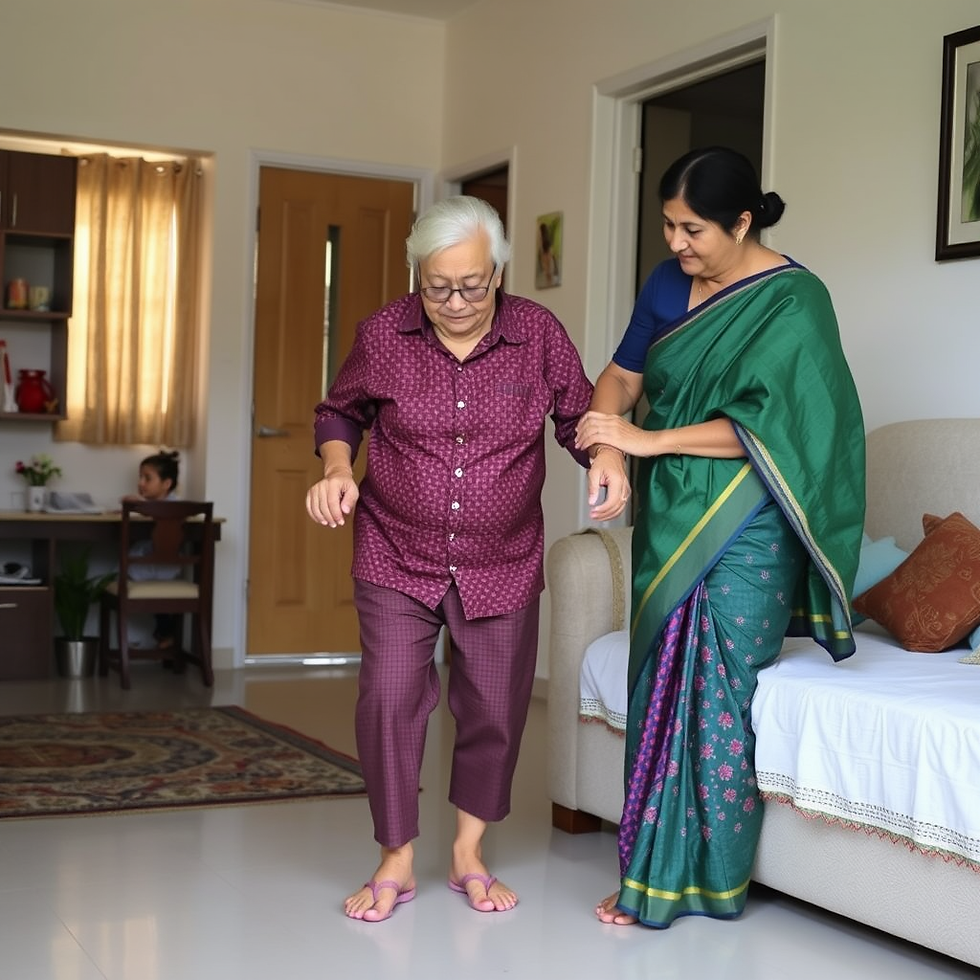
Essential Home Care for Stroke Recovery
- MOHAMMED AFNAS
- May 16
- 4 min read

Updated: Jun 1
Understanding Stroke Recovery
A stroke affects the brain’s blood supply, which can impact:
Movement and balance
Speech and communication
Memory and thinking
Swallowing ability
Muscle strength
Emotional health
Recovery speed varies from person to person. Some patients improve within weeks, while others may need months of rehabilitation and support. The first few months after a stroke are usually the most important for recovery progress.
Creating a Safe Recovery Environment at Home
One of the biggest problems after a stroke is the increased risk of falls and injuries. Simple home modifications can improve safety immediately.
Remove Fall Hazards
Try to:
Remove loose rugs
Keep floors dry
Improve lighting
Clear walking paths
Arrange frequently used items within easy reach
Bathrooms need special attention because wet floors can be dangerous for patients with weak balance.
Install Supportive Equipment
Helpful home support products include:
Grab bars near toilets and bathrooms
Anti-slip mats
Bedside commodes
Walkers or walking sticks
Wheelchairs for limited mobility
For patients with severe weakness, transfer support equipment can also reduce strain on caregivers.
Helping Stroke Patients Regain Mobility
Mobility recovery is one of the main goals after a stroke. Lack of movement can increase stiffness, muscle weakness, and bed sore risk.
Encourage Safe Movement
Doctors and physiotherapists often recommend gradual movement exercises such as:
Sitting upright regularly
Assisted standing practice
Short indoor walks
Hand and leg exercises
Balance training
Never force movement if the patient experiences pain or dizziness.
Use Mobility Aids Correctly
Different mobility products help at different recovery stages:
Wheelchairs
Useful for patients with:
Severe weakness
Poor balance
Fatigue during walking
Foldable wheelchairs are practical for Indian homes with limited space.
Walkers
Walkers provide support during walking practice and reduce fall risk.
Commode Chairs
These help patients who struggle to walk safely to the bathroom, especially at night.
Preventing Bed Sores During Recovery
Many stroke patients spend long hours in bed or seated in one position. This increases the risk of pressure sores, also called bed sores. Common pressure areas include:
Lower back
Heels
Hips
Elbows
Practical Prevention Tips
Change positions every 2–3 hours
Keep skin dry and clean
Use soft cushions
Avoid wrinkled bedsheets
Inspect skin daily
Air Beds Can Help
Air mattresses are often helpful for bedridden stroke patients because they reduce continuous pressure on the skin. They are especially useful for elderly patients with limited movement.
Speech and Communication Recovery
Some stroke survivors experience difficulty speaking or understanding language. This condition can be frustrating for both the patient and family members.
Helpful Communication Tips
Speak slowly and clearly
Use short sentences
Allow extra response time
Avoid interrupting
Encourage small conversations daily
Even small improvements in communication can boost confidence significantly. Speech therapy exercises at home are often recommended by rehabilitation specialists.
Managing Emotional Changes After Stroke
Stroke recovery is not only physical. Many patients experience:
Anxiety
Depression
Mood swings
Irritability
Loss of confidence
Family members sometimes mistake these changes as stubbornness, but emotional changes are common after a stroke.
How Caregivers Can Help
Maintain a calm routine
Encourage social interaction
Celebrate small improvements
Avoid harsh criticism
Support independence where possible
Patients recover better emotionally when they feel respected and included in daily life.
Nutrition Tips for Stroke Recovery
Proper nutrition supports healing, energy, and muscle strength.
Helpful Foods During Recovery
Depending on the doctor’s advice, many stroke recovery diets include:
Protein-rich foods
Fruits and vegetables
Soft foods if swallowing is difficult
Adequate water intake
Fiber-rich foods to reduce constipation
Avoid excessive salt, fried foods, and sugary snacks if advised by the doctor. If swallowing problems exist, consult a speech therapist or doctor before changing food textures.
Maintaining Hygiene for Stroke Patients
Hygiene becomes difficult when mobility is reduced. Poor hygiene can increase discomfort, infections, and caregiver stress.
Important Hygiene Essentials
Useful products for home care may include:
Adult diapers
Disposable underpads
Wet wipes
Waterproof mattress protectors
Bath chairs
Daily cleaning and dry bedding greatly improve comfort for recovering patients.
Practical Tips for Family Caregivers
Caregiver burnout is very common during long-term stroke recovery. Many family members try to manage everything alone, which can become physically exhausting.
Smart Caregiving Tips
Create a daily care schedule
Ask relatives for support
Use assistive products to reduce physical strain
Take short breaks regularly
Attend follow-up medical appointments
Recovery is usually gradual. Consistency matters more than rushing progress.
Recommended Products for Stroke Recovery at Home
Depending on the patient’s condition, these products may help:
Wheelchairs
Walkers
Commode chairs
Air beds
Adult diapers
Bedside tables
Transfer belts
Anti-slip bathroom mats
Waterproof bed protectors
Choosing practical home-care products can improve both patient comfort and caregiver efficiency.
Conclusion
Stroke recovery at home requires patience, planning, and daily support. While the process can feel overwhelming initially, a safe environment, proper mobility support, hygiene care, and emotional encouragement can make recovery smoother. Families should focus on gradual improvement instead of expecting immediate results. Small daily steps often lead to meaningful long-term recovery. With proper care and supportive equipment, many stroke survivors regain confidence and improve their quality of life at home.
FAQs
How long does stroke recovery take?
Recovery time varies widely. Some patients improve within weeks, while others may need several months or longer rehabilitation.
Can stroke patients recover fully at home?
Many patients recover significantly at home with physiotherapy, medical follow-up, proper nutrition, and family support.
What equipment is useful after a stroke?
Commonly used products include wheelchairs, walkers, commode chairs, air beds, grab bars, and adult diapers.
How can bed sores be prevented in stroke patients?
Frequent position changes, clean bedding, skin checks, and air mattresses help reduce bed sore risk.
Is physiotherapy important after stroke?
Yes. Physiotherapy helps improve strength, mobility, balance, and independence during recovery.


Comments